GSA SER Global Site List
Understanding the GSA SER Global Site List
The GSA SER global site list sits at the heart of any serious link-building automation strategy. It is a centralized database of URLs that the software checks against every time a new campaign runs, preventing duplicate submissions and ensuring that each target domain is approached only once across all your active projects. Without a well-maintained GSA SER global site list, your success rate drops, resources get wasted, and the risk of being flagged for spam increases dramatically.
Why a Clean Global Site List Matters
When GSA Search Engine Ranker posts to thousands of platforms, it relies on internal logic to skip domains that already received your links. The global site list stores those processed URLs, along with submission timestamps and status codes. Running campaigns without importing a solid GSA SER global site list means the engine has no memory of past work. You end up hammering the same websites repeatedly, triggering account bans and wasting precious verified lists.
A curated GSA SER global site list also accelerates project setup. Instead of starting from zero and letting the software crawl blindly, you can load a list containing millions of pre-verified, contextual targets. This drastically shortens submission queues and helps new projects rank faster without any overlap between different money sites.
How to Import and Merge Lists
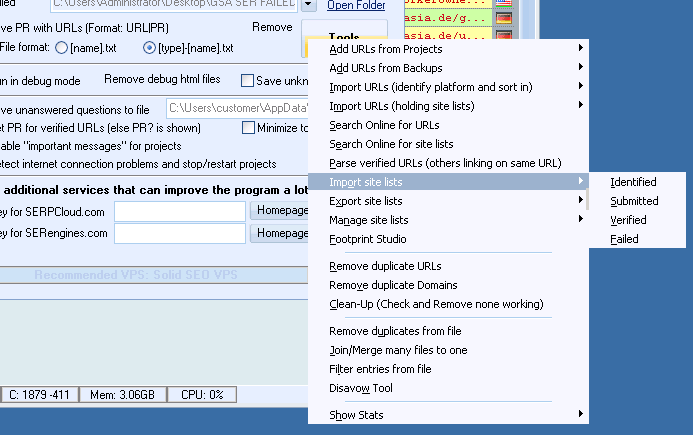
GSA SER makes it straightforward to manage your master file. Under the advanced options tab, you will find the tools dedicated to global site management. You can import a plain text file with one URL per line, or merge multiple smaller lists into one monolithic GSA SER global site list. The merge function automatically removes duplicates and keeps the newest submission record, preserving an accurate history.
It is wise to keep a compressed backup of your GSA SER global site list outside the default installation folder. Unexpected crashes or operating system reinstalls can wipe months of submission data. Export regularly and store the .dat or .txt files in cloud storage. This simple habit saves weeks of re-verification work.
Building Your Own High-Quality List
Many beginners search for pre-made downloadable packs, but the most powerful GSA SER global site list is the one you build yourself. Use GSA SER’s own identified and verified site lists, then push the successful URLs into the global list. Combine this with URL scraping from SERP footprints, competitors’ backlinks, and expired web 2.0 properties. The more targets you feed into the global memory, the richer your campaigns become.
Another effective method is to run a dedicated global list building project. Configure a campaign with loose filters, massive keyword lists, and aggressive threading. Let it run 24/7 on a VPS. Every successfully posted URL gets funneled into your GSA SER global site list. After a few weeks, you will possess a proprietary asset containing millions of categorized, live targets that no one else owns.
Cleaning and Deduplication
Over time, a GSA SER global site list accumulates dead domains, spam traps, and URLs that return 404 errors. Leaving them in the list bloats the database and slows down the memory-checking process. Regularly run the internal duplicate and dead link removal tools. Some power users export the list into external software to perform a hard HTTP status check, then re-import only the 200 OK domains. A lightweight, fully responsive list keeps submission speed high and error rates low.
Combining the Global List with Campaign Filters
The global site list works best when paired with strict campaign-level settings. Even if a domain is missing from your GSA SER global site list, you can still block entire TLDs, languages, or OBL counts. When you merge both filters, you ensure that no project ever submits to a Chinese .cn blog with 500 outbound links, even if the domain hasn’t been recorded yet. This layered approach protects your money sites and preserves the integrity of the global database.
Syncing Across Multiple Instances
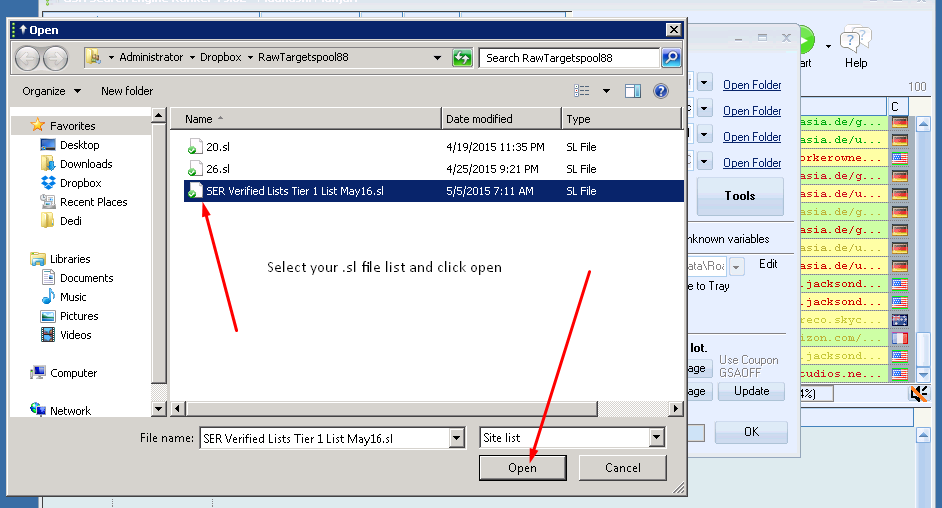
Agencies running several GSA SER licenses often need a shared GSA SER global site list. Instead of copying files manually, you can point multiple installations to a single network folder or a Dropbox-synced directory. One instance acts as the master collector, constantly writing verified records, while all other installations read from that central file in real time. This instantly prevents duplicate interlinking among different clients’ projects and maximizes the utility of every single built link.
Keeping the List Future-Proof
Search engine algorithms and platform footprints change constantly. A static GSA SER global site list loses value within months. Schedule a recurring maintenance window where you scrape fresh target engines, remove obsolete CMS types, and integrate newly discovered footprints. The best time to update your GSA SER global site list is immediately after a major GSA SER engine update, when new platforms become available and old ones are deprecated. Treat the list as a living, breathing asset, and your SEO campaigns will consistently outrank those relying on stale, bloated databases.
check here